Classic Smiling Emoji: A Stitch-Out Review
As an embroidery designer who has stitched out thousands of files for both personal joy and commercial client work, I approach every new machine embroidery design with a healthy dose of skepticism. We have all downloaded files that look perfect on screen but turn into thread nests or distorted shapes once the needle hits the fabric. When evaluating the Classic Smiling Emoji for potential use in my shop and client projects, I looked past the digital preview to assess how this design actually performs as a tangible product asset. This isn't just about whether the file opens; it is about whether it sells, lasts, and represents your brand well.
First Impressions and Digital Integrity
My first interaction with the Classic Smiling Emoji was checking the technical foundation. For those of us running multi-needle machines or single-needle home setups, format compatibility is non-negotiable. This design arrives in a comprehensive suite including 10O, ART, CND, DSB, DST, DSZ, EXP, HUS, JEF, PCS, PEC, PES, TAP, VIP, VP3, and XXX. Having access to native formats like ART and VP3 alongside industry standards like DST and PES means I can open the file in my preferred software without relying on generic converters that often corrupt stitch paths or alter density.
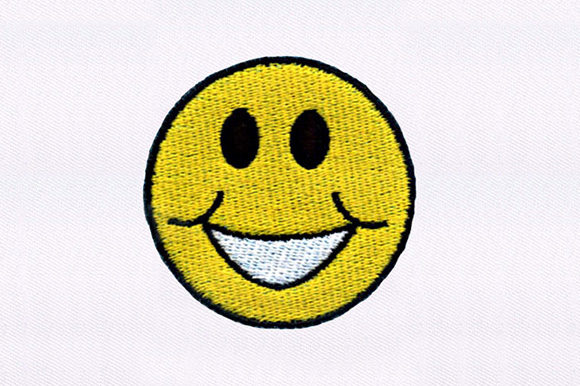
Visually, the design captures a specific mood. It balances nostalgia with modern cleanliness. In the Friends category, emojis can sometimes feel juvenile, but this rendition maintains a classic aesthetic that appeals to a broader demographic. The lines are confident, and the expression is universally recognizable without being overly cartoonish. As a digital product seller or Etsy creator, this visual clarity is vital. Customers scrolling through thumbnails need to instantly understand what they are buying, and this design communicates its value immediately.
Real-World Application: The Custom Tote Bag Test
To truly judge this embroidery file, I simulated a real production scenario: creating a custom canvas tote bag for a local boutique collaboration. Tote bags are high-stress items; they get washed, crumpled, and loaded with heavy groceries. A design that looks good on a pillow might fail completely here.
I hooped a medium-weight natural canvas with a cutaway stabilizer to prevent puckering. The Classic Smiling Emoji stitched out with remarkable stability. The circular geometry of an emoji is notoriously difficult because any tension imbalance turns the circle into an oval. However, this design held its shape beautifully. The transition between the yellow fill and the black facial features was clean, with no excessive gaps or overlapping bulk that could cause needle breaks on thicker fabrics.
For small business owners and apparel decorators, this reliability translates directly to profit. I did not have to re-hoop or discard a blank due to registration errors. When selling custom apparel or accessories, consistency builds trust. If a customer buys two tote bags six months apart, they expect the smiley face to look identical. This design’s predictable stitch path ensures that level of quality control.
Navigating Fabric Variables and Stabilization
While the tote bag test was successful, professional judgment requires testing limits. Not every project uses stable canvas. I evaluated how the Classic Smiling Emoji would behave on more challenging substrates common in handmade products.
- Stretchy Knits and Sweatshirts: This is where stitch density matters most. On a fleece sweatshirt, the design requires adequate underlay to prevent the stitches from sinking into the pile. Because the emoji relies on solid coverage, using a fusible poly-mesh stabilizer is essential to keep the face crisp. Without it, the smile may distort when the garment stretches.
- Textured Linens and Tea Towels: For kitchen items and holiday gifts, the fabric texture competes with the design. The Classic Smiling Emoji has enough presence to stand out against slubbed linen, but I recommend a water-soluble topping to ensure the satin elements remain smooth and don't get lost in the weave.
- Dark Fabrics: Contrast is key. While the classic yellow-on-black colorway is iconic, placing this on a navy or charcoal background requires careful thread selection. Ensure your yellow thread has high opacity. If the design uses a light-colored outline, verify it is dense enough to block out the dark fabric underneath, or consider adding a white underlay specifically for contrast enhancement.
Commercial Viability for Makers and Sellers
For Etsy sellers and creative entrepreneurs, time is money. The Classic Smiling Emoji serves as an excellent anchor design for various niches. It works exceptionally well as a secondary element in larger compositions. Imagine pairing it with personalized text on a baby bib or adding it as a cheerful accent on a nurse’s scrub cap. Its universal recognition makes it a safe bet for commercial embroidery ventures targeting diverse age groups.
However, a word of caution regarding placement. Avoid placing this design over seams, pockets, or thick collar areas unless you are experienced with partial hooping or adhesive stabilization. The uniform density of the emoji means it will not forgive uneven surfaces. Additionally, while the design is versatile, always confirm your licensing terms before mass-producing finished goods or reselling the digital embroidery file itself. Protecting your business starts with respecting intellectual property.
Designer Notes for Optimal Results
Before you commit this design to a final finished product, run through this practical checklist derived from my own studio experience:
- Verify Hoop Size: Never assume the design fits your smallest hoop just because it is an emoji. Check the actual dimensions in your software. Resizing can alter stitch counts and density; if you must resize significantly, recalculate your parameters.
- Thread Color Testing: Monitor lighting affects perception. What looks like a vibrant golden yellow on screen might stitch out too pale or too orange under shop lights. Test your specific thread brand against the fabric before running a full batch.
- Mockup Validation: Create printable mockups in both grayscale and color. This helps identify if the design relies too heavily on color contrast to be legible. A good embroidery design should read clearly even in black and white.
- Wash Test: If selling baby embroidery or kitchen textiles, wash and dry your sample three times. Check for thread shrinkage or stabilizer residue. The Classic Smiling Emoji should maintain its cheerfulness after laundering.
- Needle Selection: For tight satin stitches around the eyes and mouth, a sharp needle (like a 75/11) often produces cleaner edges than a universal needle, especially on woven fabrics.
Elevating Your Handmade Brand
Ultimately, the Classic Smiling Emoji is more than just a cute graphic; it is a functional tool for makers. Whether you are stitching patches for craft fairs, personalizing gifts for friends, or building a cohesive collection for your online shop, this design offers a blend of technical reliability and broad appeal. It respects the crafter's time by stitching out cleanly and respects the customer's investment by looking professional on the final item.
In a market saturated with complex, overly dense designs, there is profound value in simplicity executed well. This design reminds us that successful machine embroidery isn't always about maximum detail; it is about appropriate design for the intended medium. By understanding the nuances of stabilization, fabric choice, and commercial application, you can transform this digital asset into a best-selling staple in your embroidery repertoire. Always remember to test, adjust, and create with intention, ensuring that every smile you stitch brings genuine satisfaction to both maker and owner.